Relationship guide
Aunt vs half sibling: a close-match question DNA cannot answer alone
How to approach a DNA match that could be an aunt, uncle, niece, nephew, or half sibling without overstating what a cM total proves.
Updated 2026-09-13 · 6 min read · Genealogy & education only
Why this ambiguity is common
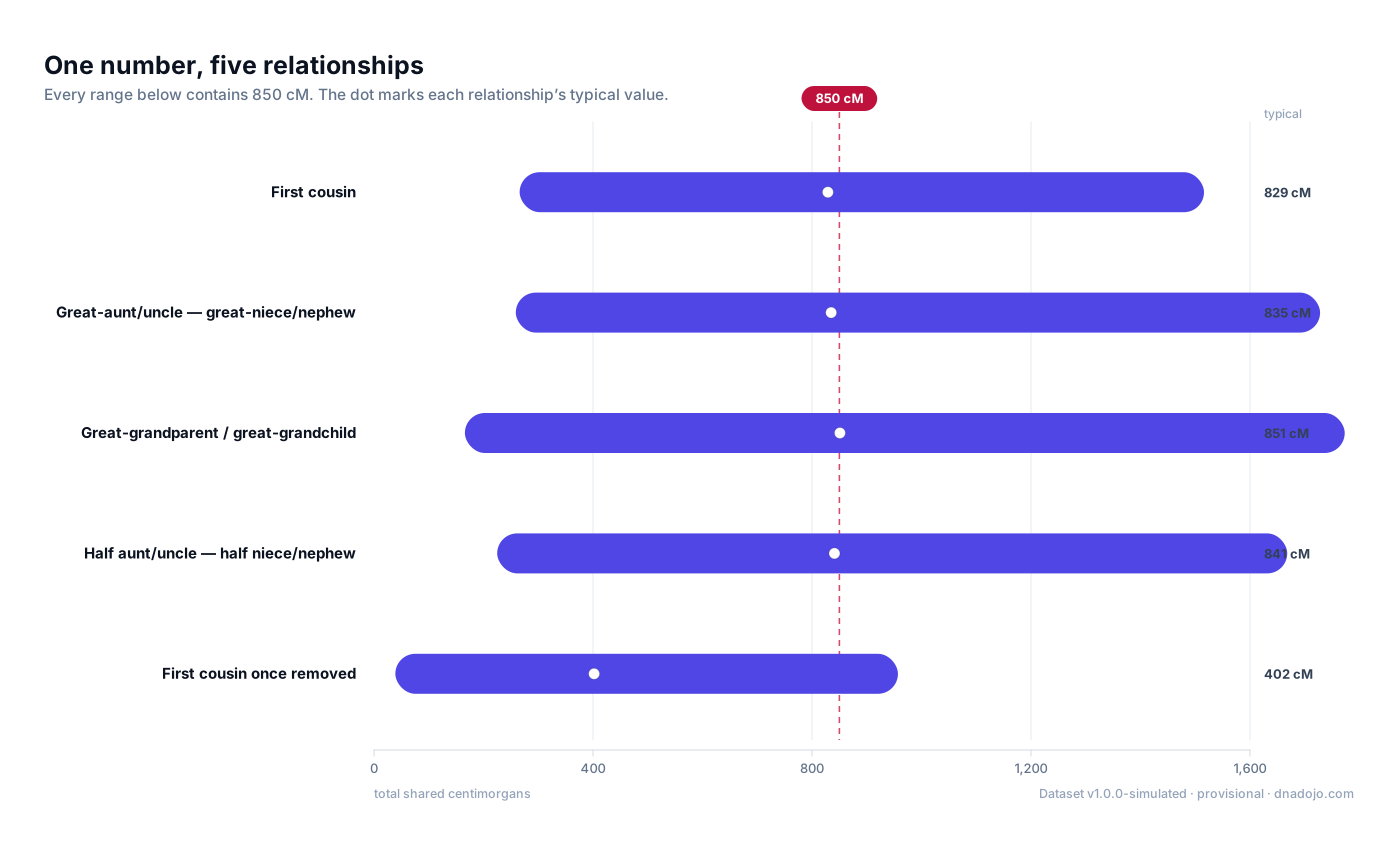
An aunt or uncle is a sibling of your parent; a half sibling shares one parent with you. Both paths can produce similar total sharing. The number cannot know which generation the shared parent belongs to.
This is why a close-match label can be both helpful and incomplete. It tells you to investigate a small set of relationships, not which one to announce.
Build an evidence ladder
Start with age and known relatives. Next, inspect who the match shares with your parents’ families. A true aunt or uncle should be embedded in a parent’s sibling network. A half sibling should share one parent’s relatives as a child would.
If the conclusion is unexpected, keep a private research record and seek corroboration before initiating a difficult conversation.
What else could fit?
| Possibility | Why it can look similar | What to check |
|---|---|---|
| Aunt or uncle | Shares a parent with your parent. | Matches your parent as a sibling. |
| Half sibling | Shares one parent with you. | Same-generation context; matches one parent as a child. |
| Grandparent | Also overlaps near a quarter. | Generation and direct-parent connection. |
What to do next
- Save the match information privately.
- Check ages and parental shared matches.
- Seek a second independent line of evidence before making contact or changing a tree.
Questions people ask
Can an aunt and half sibling share the same cM?
Yes. Their ranges overlap substantially.
Can age settle it?
Age often helps greatly, but unusual family timing means it should be confirmed with other evidence.
What if the result is unexpected?
Slow down, verify the facts, and consider the privacy of everyone involved.
Published September 14, 2026 · Reviewed against DNADojo dataset v1.0.0-simulated · Sources and limitations