Learn
What is a centimorgan?
A centimorgan measures how likely a stretch of DNA is to stay together when it is passed on. It is a probability unit, not a ruler — and that explains most of the confusion about matches.
Updated 2026-09-13 · 8 min read · Genealogy & education only
What a centimorgan actually measures
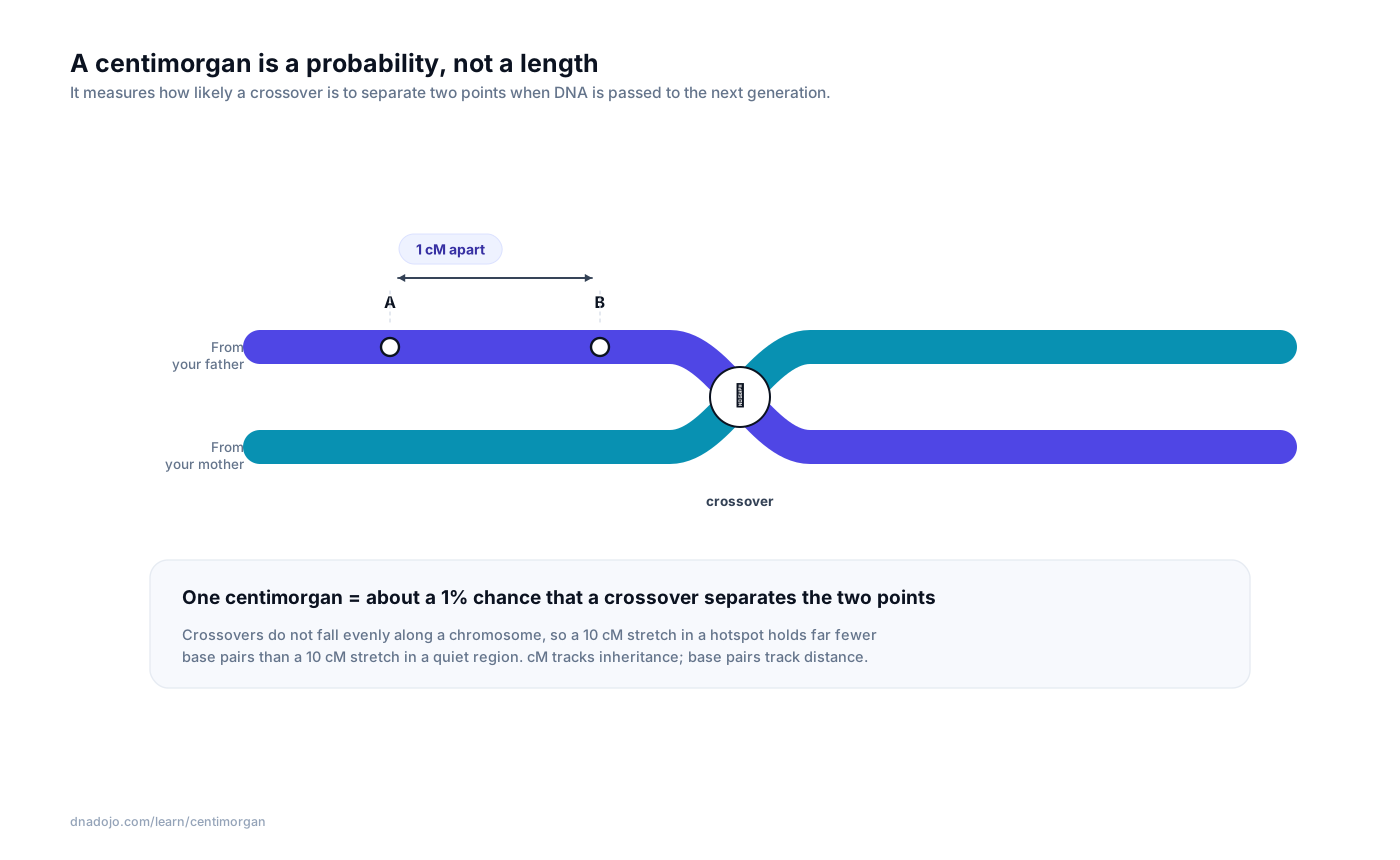
A centimorgan (cM) is a unit of recombination probability. One centimorgan is the distance along a chromosome over which there is roughly a one percent chance that a crossover will separate two points during the formation of an egg or sperm cell.
That is the whole definition, and it is worth sitting with, because it explains everything that follows. A centimorgan is not a count of letters. It is a statement about how likely two bits of DNA are to travel together into the next generation.
Why it is not a length
Recombination does not happen evenly along a chromosome. Some regions are crossover hotspots; others are remarkably quiet. So a stretch worth 10 cM near a hotspot may contain far fewer base pairs than a 10 cM stretch in a cold region.
This is why you cannot convert cM to megabases with a single multiplier, and why two testing companies looking at the same physical segment can report slightly different cM values: they are using different genetic maps.
How many centimorgans are there in total?
The autosomal genome — chromosomes 1 through 22, excluding X, Y and mitochondrial DNA — comes to somewhere around 6,970 cM measured once. Different companies report totals between roughly 6,700 and 7,100 cM depending on the chip and the genetic map they use.
DNADojo uses 6,970 cM as its working total, and says so on every page that converts between cM and percentages, because that constant is the difference between "12.5%" and "12.8%".
Reading a shared-cM number
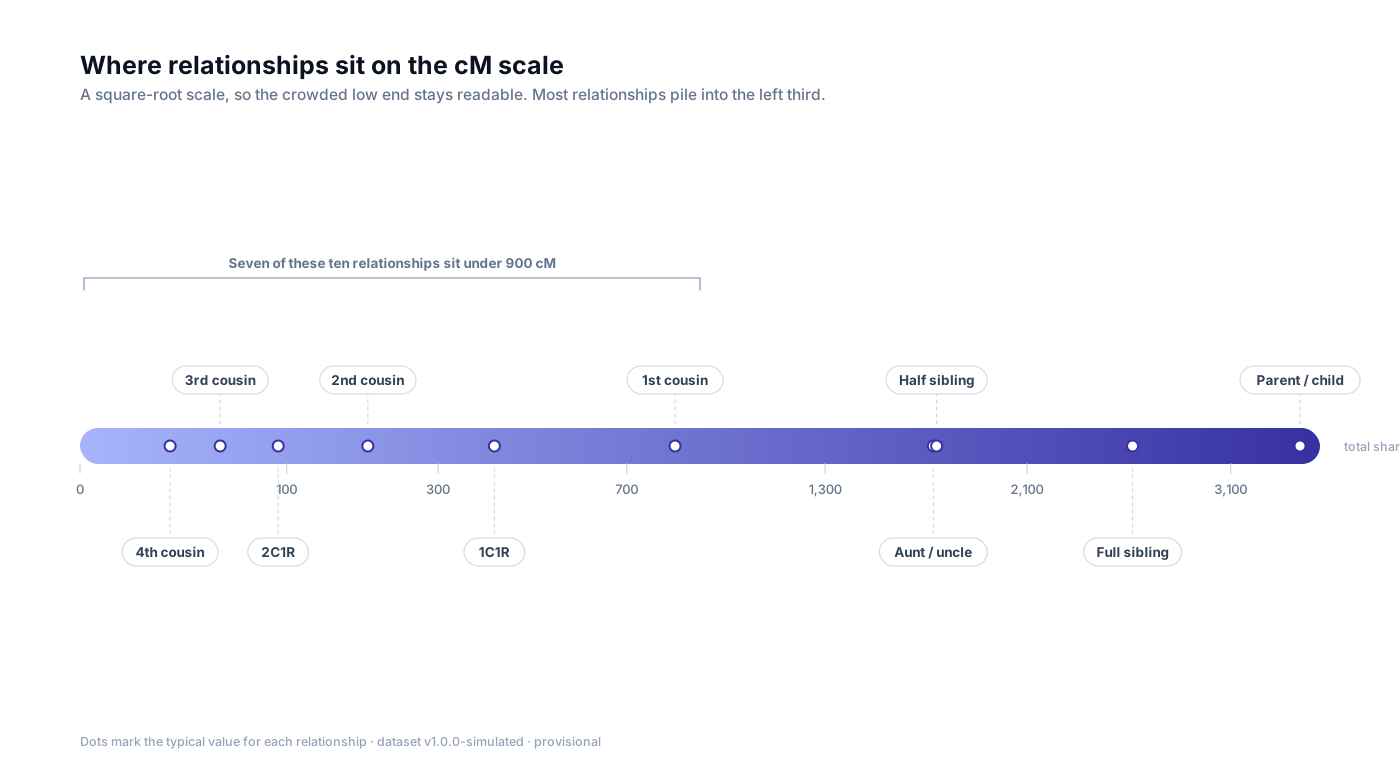
When a testing company says you share 850 cM with someone, it means the total length of the segments where your DNA matches theirs adds up to 850 cM. Roughly 12.5% of your autosomal genome. That is consistent with a first cousin — and with a half aunt, a great-grandparent, a great-aunt, and a first cousin once removed.
One number, five plausible relationships. This is not a failure of the test. It is a direct consequence of the randomness that makes recombination interesting in the first place.
Total cM versus longest segment
Two matches can both share 90 cM with you and mean entirely different things:
- 90 cM in one segment suggests a single, relatively recent common ancestor. Long segments have not had many generations to be broken up.
- 90 cM across nine 10 cM segments often means several distant connections, population-level background sharing, or both.
Always look at the longest segment alongside the total. It is the cheapest sanity check in genetic genealogy.
Four common mistakes
- Treating cM as a percentage. Divide by the total first, and say which total you used.
- Comparing cM across platforms without noting the map. Small differences are expected and not an error.
- Trusting segments under about 7 cM. Small segments are frequently identical by state rather than by descent — they look shared but are not inherited from a common ancestor.
- Concluding a relationship from cM alone. Use it to build a shortlist, then test the shortlist against ages, documents and shared matches.
Ready to try it? Put your number into the Shared cM Calculator and read the result as a shortlist rather than an answer.