Learn
DNA segments and why they matter
Shared DNA arrives in blocks, not as a smooth percentage. The size and number of those blocks tells you more about a match than the total ever will.
Updated 2026-09-13 · 8 min read · Genealogy & education only
What a segment is
DNA is not inherited as a fine powder sprinkled evenly across your genome. It arrives in blocks. During meiosis, chromosomes cross over at a handful of points, so what you receive from a parent is a set of long stretches copied from one grandparent, alternating with stretches from the other.
When a testing company says you and a match share 87 cM, what it means is: there are one or more contiguous stretches where your DNA and theirs are the same, and those stretches add up to 87 cM.
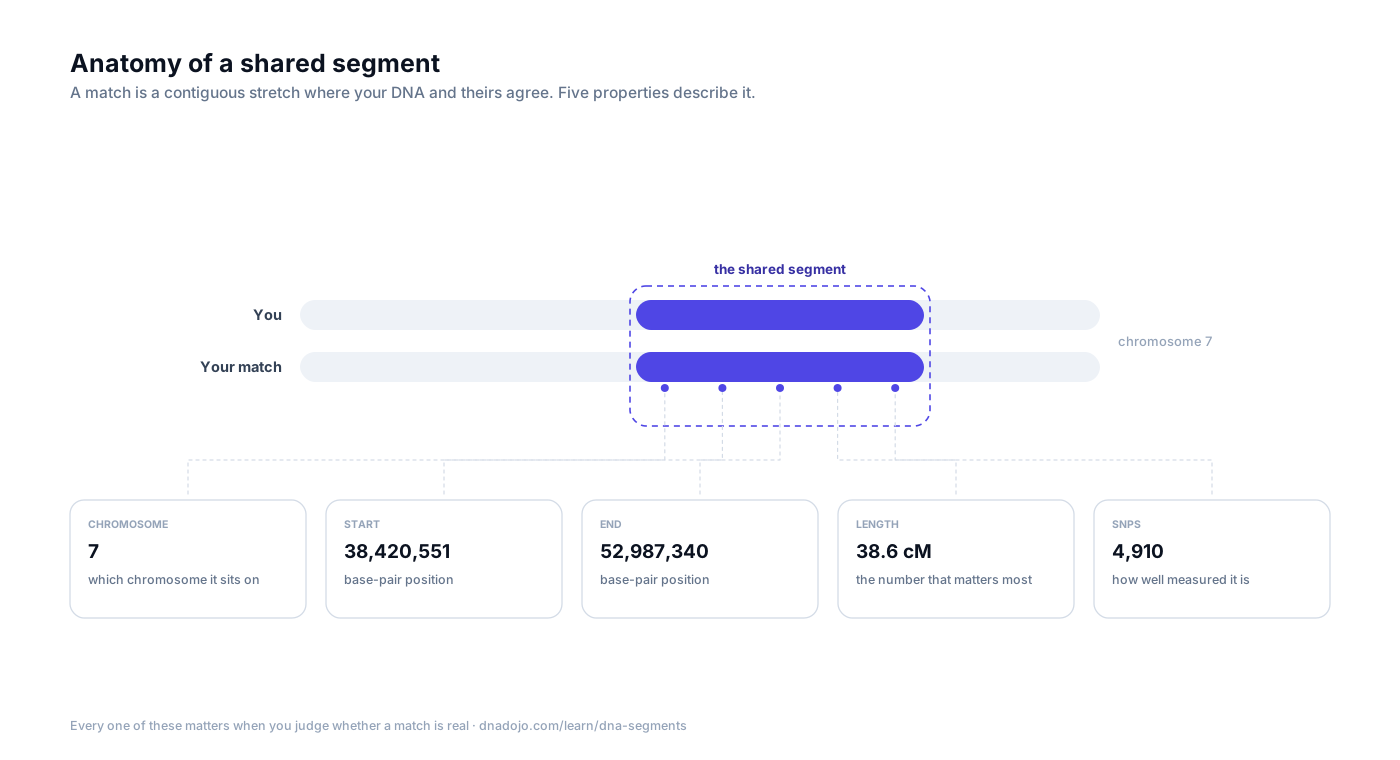
Half-identical and fully identical regions
You carry two copies of every autosome, one from each parent. A half-identical region (HIR) is a stretch where at least one of your two copies matches at least one of your match's two copies. That is what almost every match is.
A fully identical region (FIR) is where both copies match on both sides. In practice this happens between full siblings, who can inherit the same piece from both parents. If a tool shows you fully identical regions with someone, full siblinghood moves sharply up the shortlist.
Why segment size matters more than count
A crossover breaks a segment. Each generation adds crossovers, so segments inherited from a distant ancestor have been chopped smaller and smaller. Longer surviving segments therefore point to a more recent common ancestor.
| Longest segment | What it usually suggests | How much to trust it |
|---|---|---|
| Over 100 cM | A close, recent relationship | Very high |
| 30–100 cM | A traceable common ancestor within a few generations | High |
| 15–30 cM | A genuine but more distant connection | Moderate |
| 7–15 cM | Often real, sometimes not | Corroborate before building on it |
| Under 7 cM | Frequently not inherited from a shared ancestor at all | Low — treat as noise |
Identical by descent or identical by state
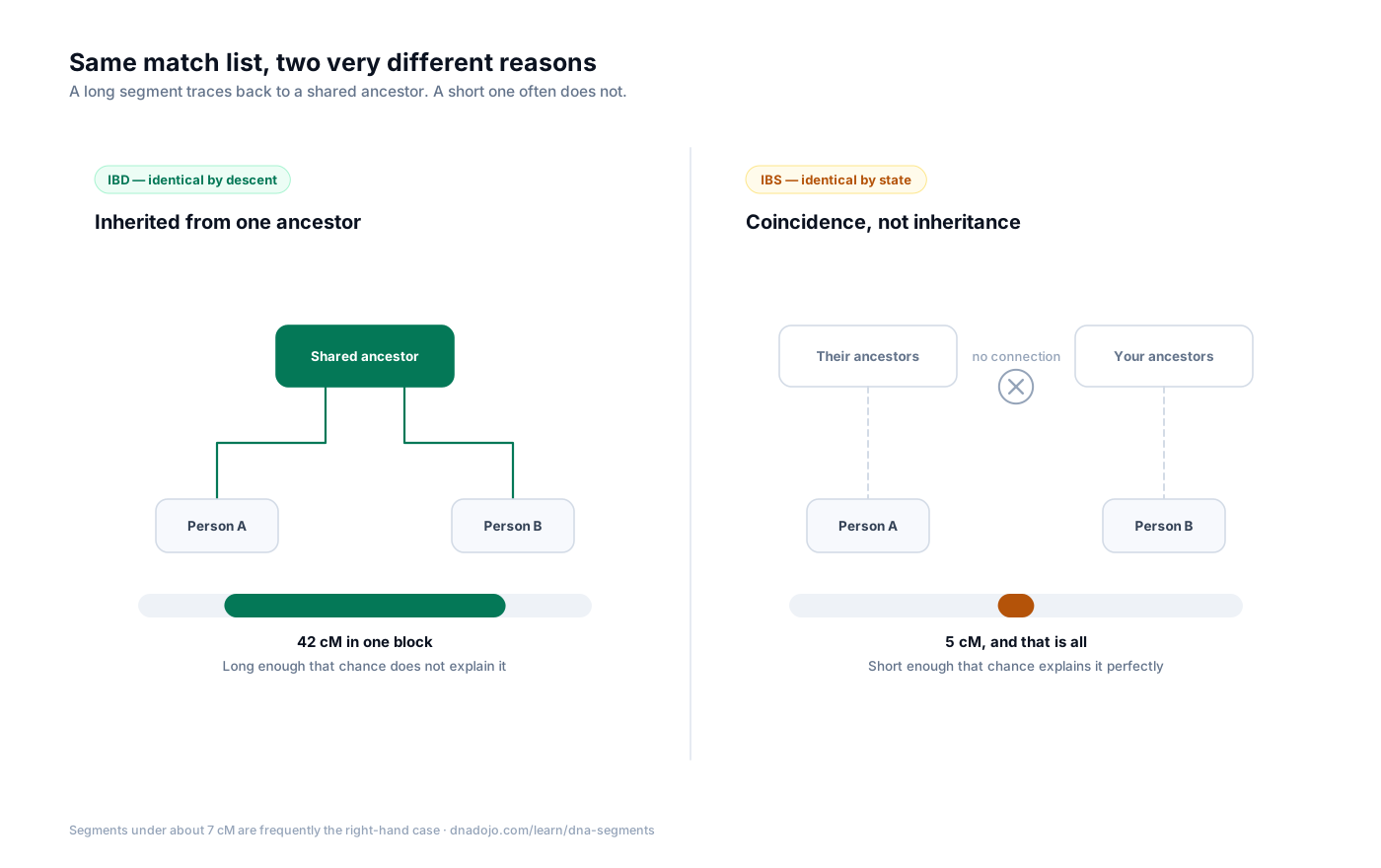
Two people can match over a stretch of DNA for two very different reasons:
- Identical by descent (IBD). You both inherited that stretch from a shared ancestor. This is the useful kind.
- Identical by state (IBS). You happen to carry the same common variants in that region because those variants are common in the population. No shared ancestor required.
Short segments are much more likely to be IBS. That is the entire reason for a lower threshold: not because small segments are uninteresting, but because you cannot tell the two apart at that size.
Sensible thresholds
- Ignore anything under 7 cM unless a whole cluster of evidence supports it.
- Check the SNP count as well as the cM length — a long segment built on very few SNPs is suspect.
- For a serious conclusion, want 20 cM or more, ideally triangulated with a third person.
Endogamy breaks the rules
In populations with long histories of intermarriage, everyone is related to everyone through many paths at once. Totals run high, small segments are everywhere, and the published relationship ranges become a floor rather than an estimate. If your ancestry is endogamous, lean harder on longest segment and on documentation, and lean less on total cM.
Want to look at the underlying data yourself? The Local DNA Explorer opens your raw genotype file in your browser without uploading it anywhere.