Learn
Triangulation for genealogists
The step that turns “we match” into “we match because of this ancestral couple”. It needs three people, one overlapping segment, and more discipline than most people apply.
Updated 2026-09-13 · 9 min read · Genealogy & education only
What triangulation proves
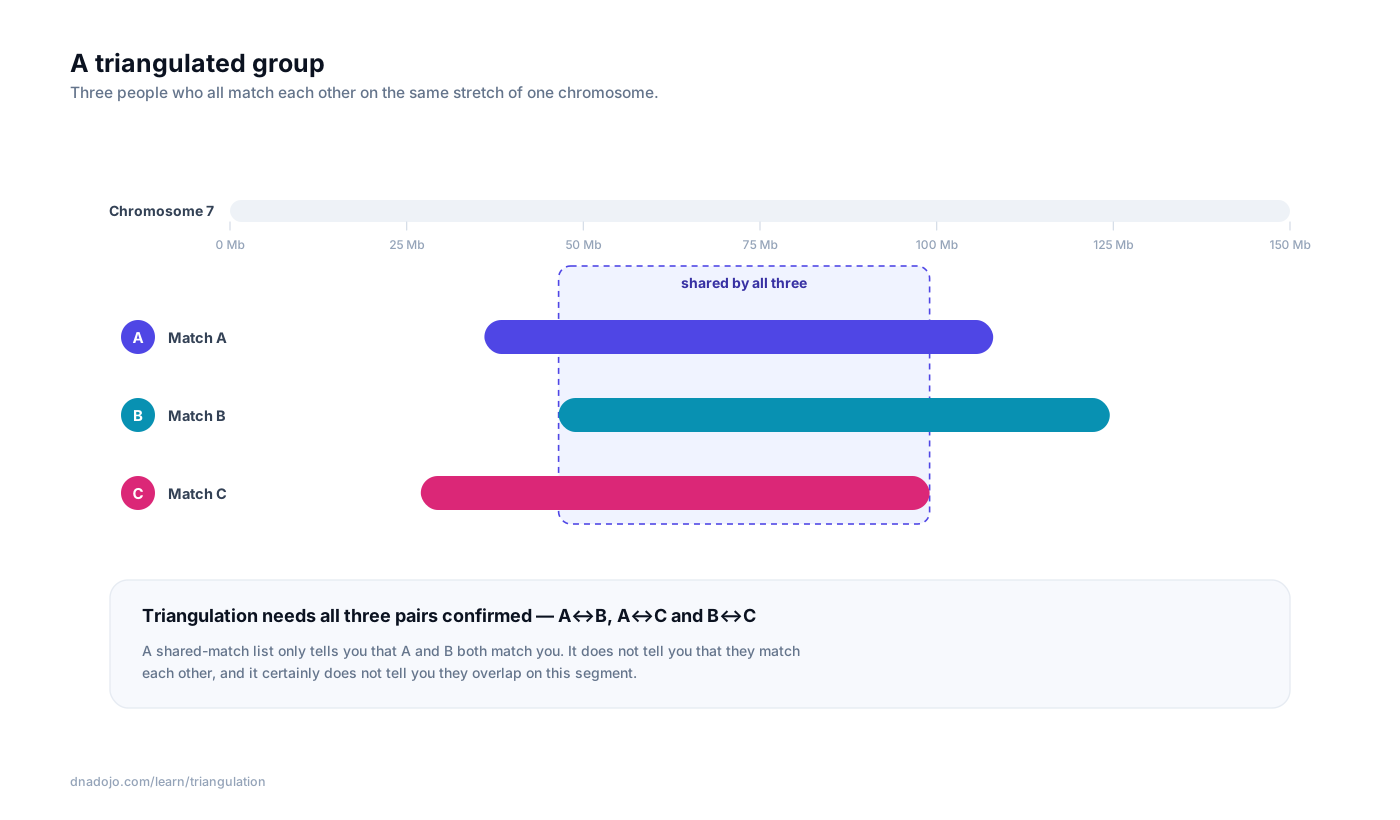
A triangulated group is three or more people who all match each other on the same chromosome segment. When that holds, the most economical explanation is that all three inherited that piece of DNA from one common ancestral line.
That is a meaningful step up from a pairwise match. Two people matching tells you there is a connection somewhere. Three people matching on one segment tells you which connection, and gives you a segment you can then attach to a documented couple.
What it is not
Three things get called triangulation that are not:
- A shared match list. A and B both matching you does not mean A and B match each other, and it certainly does not mean all three overlap on the same segment.
- Overlapping on different sides. You can match one person on your maternal copy and another on your paternal copy at the same coordinates. Same address, different chromosome copy, no shared ancestor.
- A tree hint. Two trees agreeing is a hypothesis. The segment evidence is what tests it.
How to do it
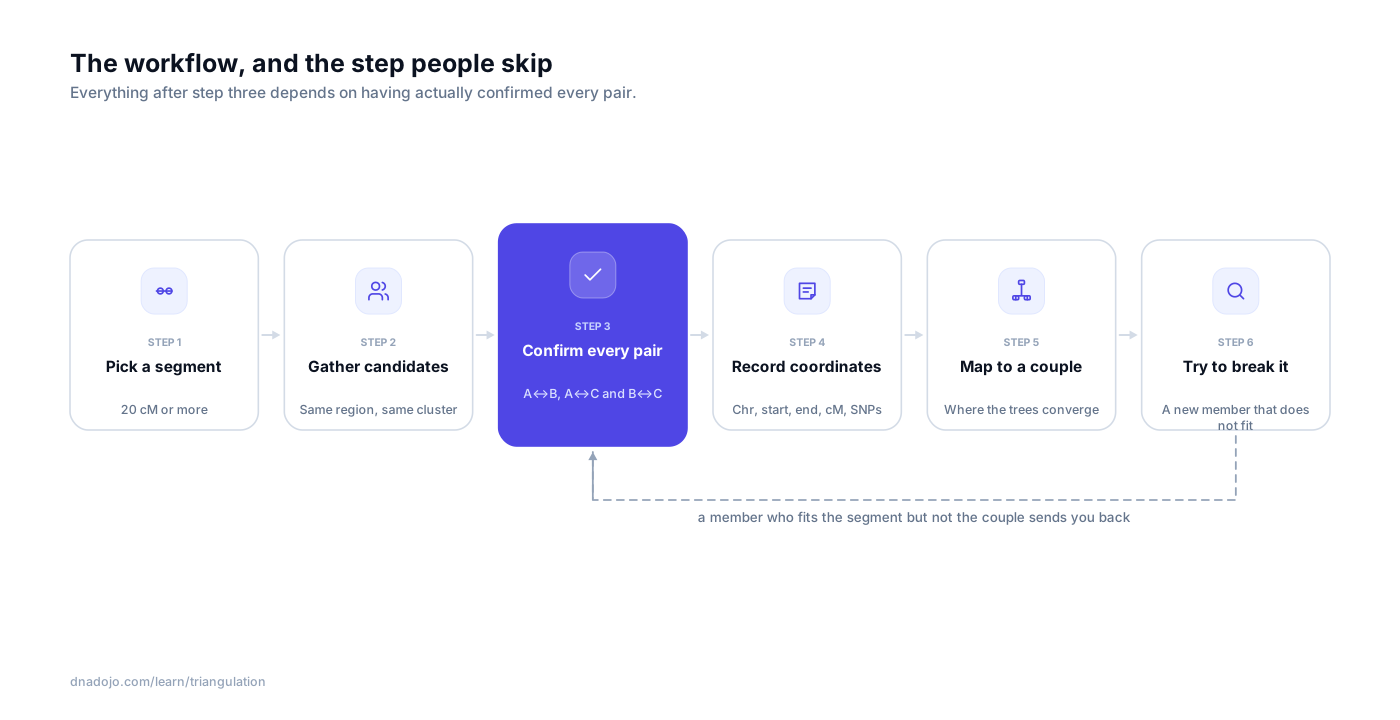
- Pick a segment worth the effort. 20 cM or more. Small segments produce confident-looking groups that mean nothing.
- Find candidates. People who match you on that region, ideally in the same shared-match cluster.
- Confirm every pair. Use a platform that lets matches be compared with each other, not only with you.
- Record the coordinates. Chromosome, start, end, cM, SNP count — for every pair, not just the best one.
- Attach it to a couple. When the members' trees converge on one ancestral couple, the segment is provisionally assigned to that line.
- Try to break it. A new member who fits the segment but not the couple is the most useful thing that can happen to your hypothesis.
Pitfalls
| Pitfall | Why it happens | What to do |
|---|---|---|
| Mixed maternal and paternal sides | Coordinates overlap but the copies differ | Phase against a known parent or close relative first |
| Pile-up regions | Some genomic regions match almost everybody | Discard known pile-up areas rather than explaining them |
| Endogamy | Many paths connect the same people | Raise your threshold and require documentary support |
| Trees copied from trees | One error propagates across dozens of trees | Verify against records, not against other users' trees |
A practical workflow
Work one segment at a time and keep a written record: the segment coordinates, who is in the group, which pairs you personally confirmed, the proposed ancestral couple, and your confidence. Six months from now you will not remember which comparisons you actually ran, and a note that says "confirmed" without saying how is worth nothing.
A structured place to keep those notes is what the planned Pro research workspace is for — metadata only, never raw DNA in the cloud.