Free calculator
Relationship Calculator
Give each person's position relative to the ancestors they share and get the correct genealogical label, the number of meioses between them, and the DNA they would be expected to share.
Two positions in one tree
Deterministic · no AIWhy the label matters
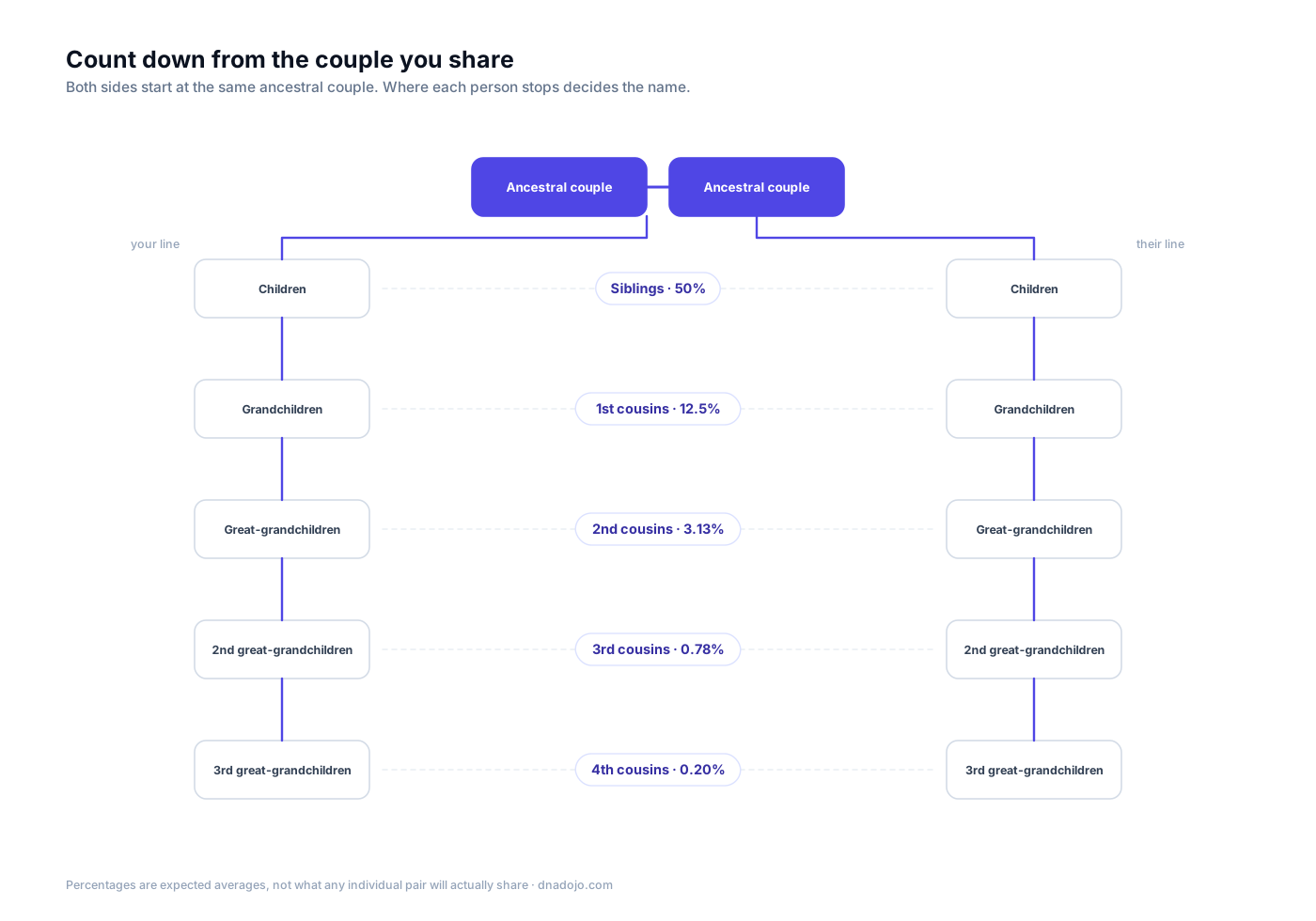
Getting the name right is not pedantry. "Second cousin" and "first cousin once removed" sit in different places on a shared-DNA chart, so mislabelling a match sends you looking for the wrong ancestral couple. The label is the hypothesis; the DNA is the test.
Expected DNA is an average, not a promise
The percentage this tool shows is the textbook expectation across many pairs of relatives. Any individual pair lands somewhere on a distribution around it, and the distribution gets wider the further apart the two people are. Two people can be documented second cousins and share 40 cM, or 380 cM. Both are normal.
Common questions
What is the difference between this and the cousin calculator?
The cousin calculator is tuned for cousin degrees and removals. This one names every relationship type from the same two inputs — direct ancestors, siblings, aunts and uncles, and cousins — and adds the expected DNA for each.
My relative is related to me through two different lines. What then?
Endogamy and pedigree collapse add up: two separate paths mean two separate contributions, and the shared DNA can be much higher than a single relationship label would suggest. This tool models one path at a time, so treat the result as the floor, not the ceiling.
Is "great-aunt" or "grand-aunt" correct?
Both are used. Genealogical style guides tend to prefer "grand-aunt" for your grandparent's sibling because it keeps the generation count consistent, but "great-aunt" is far more common in everyday English and is what this site uses.