Relationship guide
Aunt or uncle DNA: what the match can and cannot tell you
How much DNA an aunt, uncle, niece, or nephew can share and how to distinguish that path from a half sibling or grandparent.
Updated 2026-09-13 · 6 min read · Genealogy & education only
The family path matters
Your aunt or uncle is your parent’s full sibling; your niece or nephew is the child of your full sibling. Both paths pass through one parent-child link and one sibling link, which is why they land near a quarter of the genome.
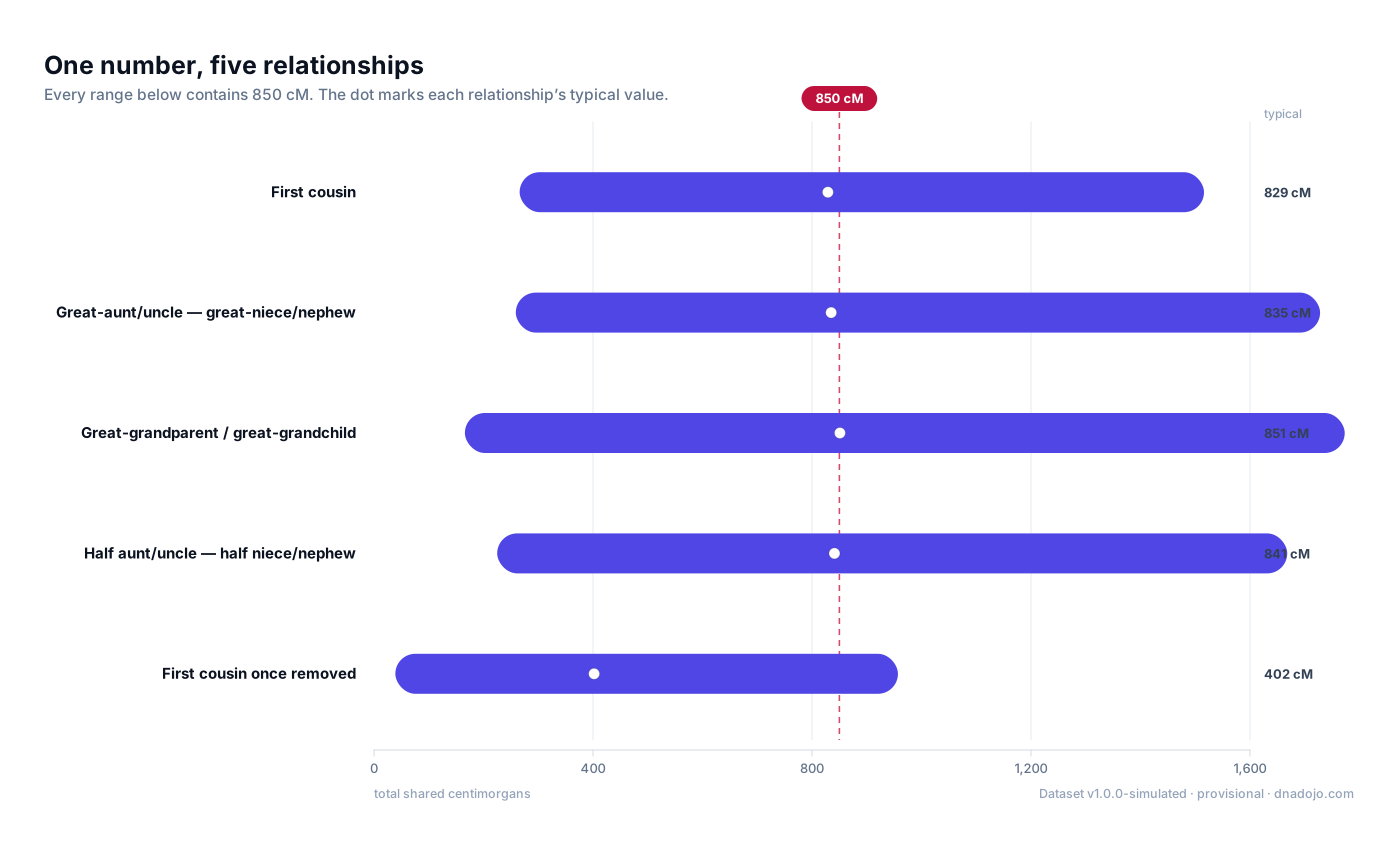
The total does not reveal the direction of the relationship. A 1,700 cM match could be an aunt, a nephew, or a half sibling. Use the people around the match to identify the generation.
What usually breaks the tie
If a parent has tested, an aunt or uncle should match that parent as a sibling. A niece or nephew should match your sibling as a parent. Those patterns are more decisive than a range chart.
Fully identical regions can also help when the alternative is a full sibling, but they should be read alongside the family context.
What else could fit?
| Possibility | Why it can look similar | What to check |
|---|---|---|
| Half sibling | Shares a similar expected amount. | Same generation and different F.I.R. pattern. |
| Grandparent | Direct-line inheritance also averages near 25%. | Age and tested-parent matches. |
| First cousin | An unusually high cousin may approach the low end. | Look for a grandparent cluster instead of a parent-sibling pattern. |
What to do next
- Place the match relative to your age first.
- Check whether they match a tested parent as a sibling or a child.
- Use shared matches to confirm the relevant parent-side branch.
Questions people ask
How many cM do aunts and nieces share?
They often share around a quarter of autosomal DNA, but real totals vary.
Can an aunt look like a half sibling?
Yes. Their total cM ranges overlap heavily.
Can DNA tell aunt from uncle?
Not from autosomal cM alone; the family tree and other DNA patterns provide context.
Published September 14, 2026 · Reviewed against DNADojo dataset v1.0.0-simulated · Sources and limitations