Relationship guide
Half first cousins: one shared grandparent, not two
A clear explanation of half first cousins, the family path behind the name, and how to distinguish them from full first cousins.
Updated 2026-09-13 · 6 min read · Genealogy & education only
One missing path changes the expectation
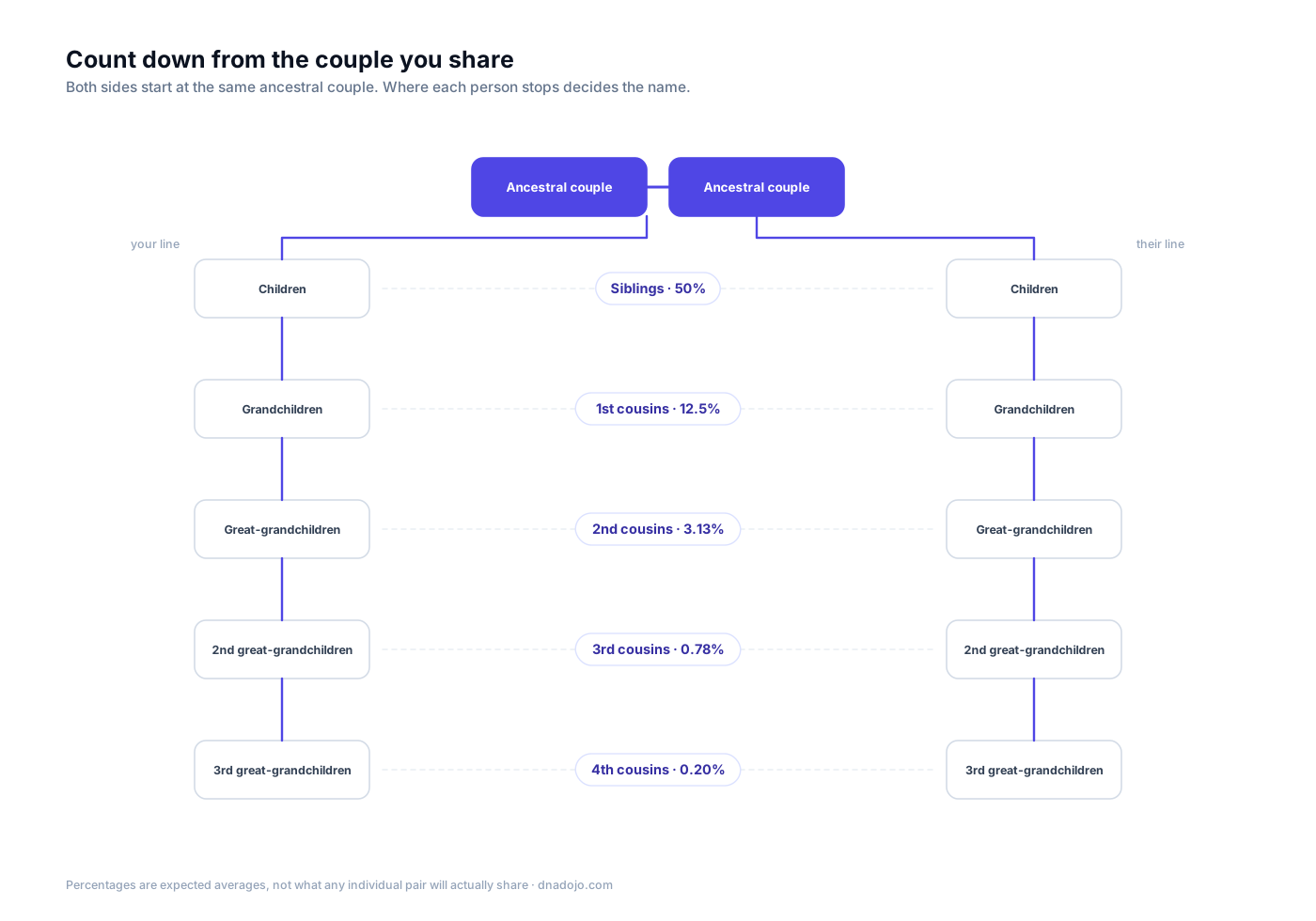
Full first cousins are connected through both members of a grandparent couple. Half first cousins have only one of those links because their parents share one parent. The relationship is still a cousin relationship, but the inheritance path is shorter on one side.
This is why the word half matters. It describes a specific family structure, not a weaker social bond.
How to recognise the path
Look for the parents first. If the two parents are half siblings, their children are half first cousins. That is easier to prove in a tree than it is to infer from a number.
A cM total can support or challenge the hypothesis, but it cannot reveal which grandparent was shared. Shared matches and records fill that gap.
What else could fit?
| Possibility | Why it can look similar | What to check |
|---|---|---|
| First cousin | A low full-first-cousin total can overlap. | Full cousins share two grandparents. |
| First cousin once removed | Range overlap can occur. | One-generation difference. |
| Second cousin | A high second cousin can look similar. | Second cousins share great-grandparents. |
What to do next
- Draw both parents and the proposed shared grandparent.
- Check whether the parents share one parent or two.
- Use shared matches to test whether the proposed grandparent line is real.
Questions people ask
What is a half first cousin?
The child of your parent’s half sibling.
Do half first cousins share DNA?
Yes, though the amount varies and is usually lower than for full first cousins.
Can cM prove a half first cousin?
No. The tree and supporting match evidence are needed.
Published September 14, 2026 · Reviewed against DNADojo dataset v1.0.0-simulated · Sources and limitations