Relationship guide
Half aunt or half uncle: one shared grandparent
What makes an aunt or uncle “half,” how that changes the family tree, and why their DNA can resemble other close relationships.
Updated 2026-09-13 · 6 min read · Genealogy & education only
Half describes the sibling connection
The word half belongs to your parent’s relationship with their sibling. They share one parent. From your perspective, that person is still an aunt or uncle, but only one grandparent connects the two family branches.
That one change creates a different expected DNA total. It does not make the relationship less real; it simply describes the inheritance path accurately.
Where confusion starts
A half aunt or uncle can look genetically similar to a first cousin or great-aunt. The tree is the deciding evidence. Look for the grandparent who appears in both branches and check whether the other parent is different.
If the match is unexpected, do not assume a missing parent immediately. First check ages, shared matches, and whether the family already contains a known half-sibling connection.
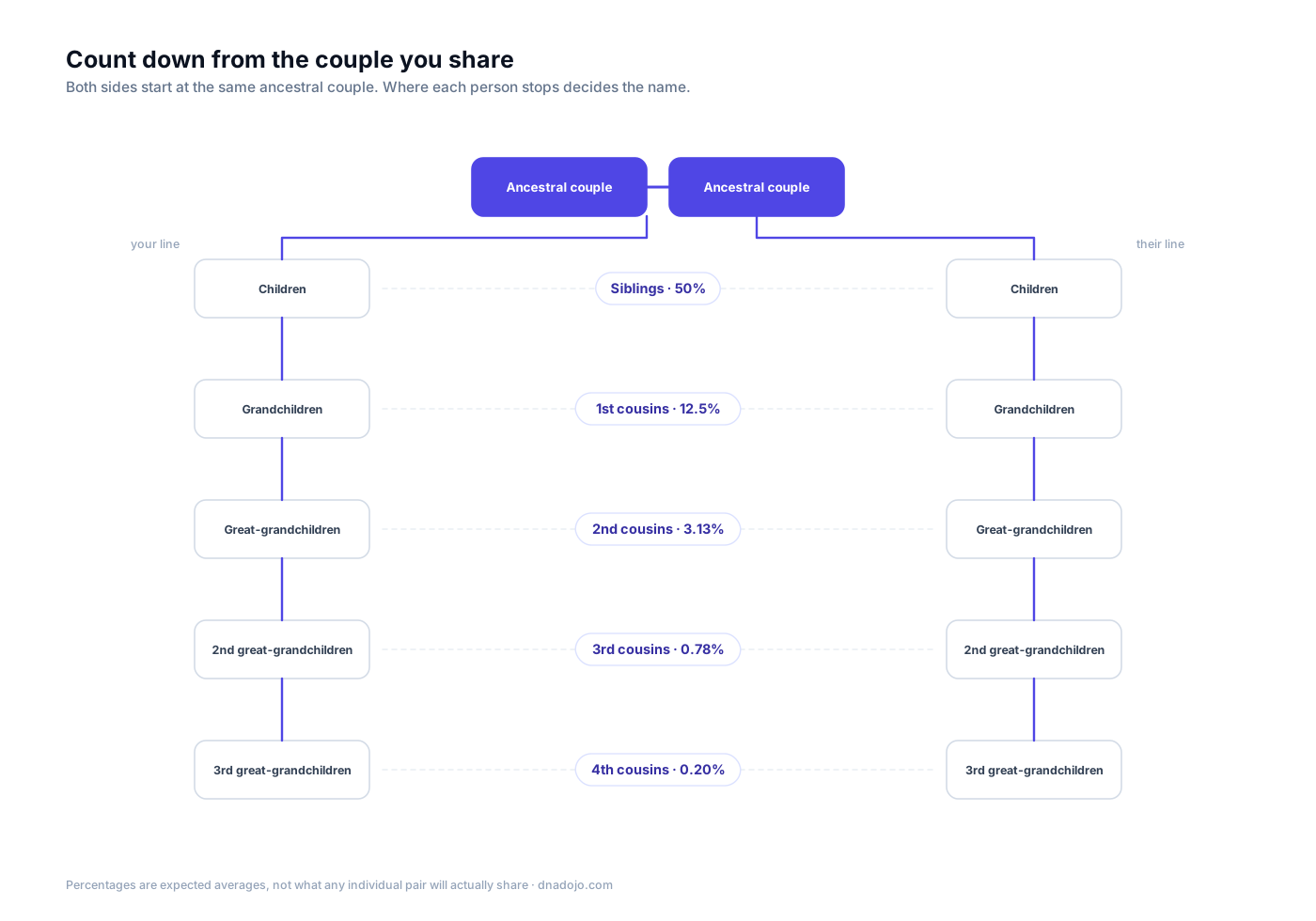
What else could fit?
| Possibility | Why it can look similar | What to check |
|---|---|---|
| First cousin | Ranges can overlap around similar cousin-level totals. | First cousins share two grandparents. |
| Great-aunt or uncle | Different generation path can overlap. | Age and tested-parent matches. |
| Half sibling | A much closer half path can be considered with high totals. | Same generation and a shared parent. |
What to do next
- Identify which grandparent is common to both branches.
- Check whether the match is your parent’s generation.
- Use shared matches to confirm the single grandparent line.
Questions people ask
What is a half aunt?
Your parent’s half sister.
How much DNA do half aunts share?
It varies, and the range overlaps other relationships; the tree provides the label.
Is a half aunt the same as a step aunt?
No. A half aunt is biologically related through one grandparent; a step aunt is related by marriage.
Published September 14, 2026 · Reviewed against DNADojo dataset v1.0.0-simulated · Sources and limitations