Match research
Can relatives share no detectable DNA?
Why a real genealogical relationship can leave no detectable autosomal DNA, and when a zero-match result is meaningful.
Updated 2026-09-13 · 6 min read · Genealogy & education only
Inheritance is a shuffle, not a family ledger
You inherit half of each parent’s autosomal DNA, but you do not inherit a neat half of every grandparent, great-grandparent, or more distant ancestor. Chromosomes are broken and reshuffled at every generation.
That means a documented distant cousin relationship can be entirely real while leaving no segment large enough for a testing company to report. The absence of a match does not erase the paper trail.
Where zero becomes informative
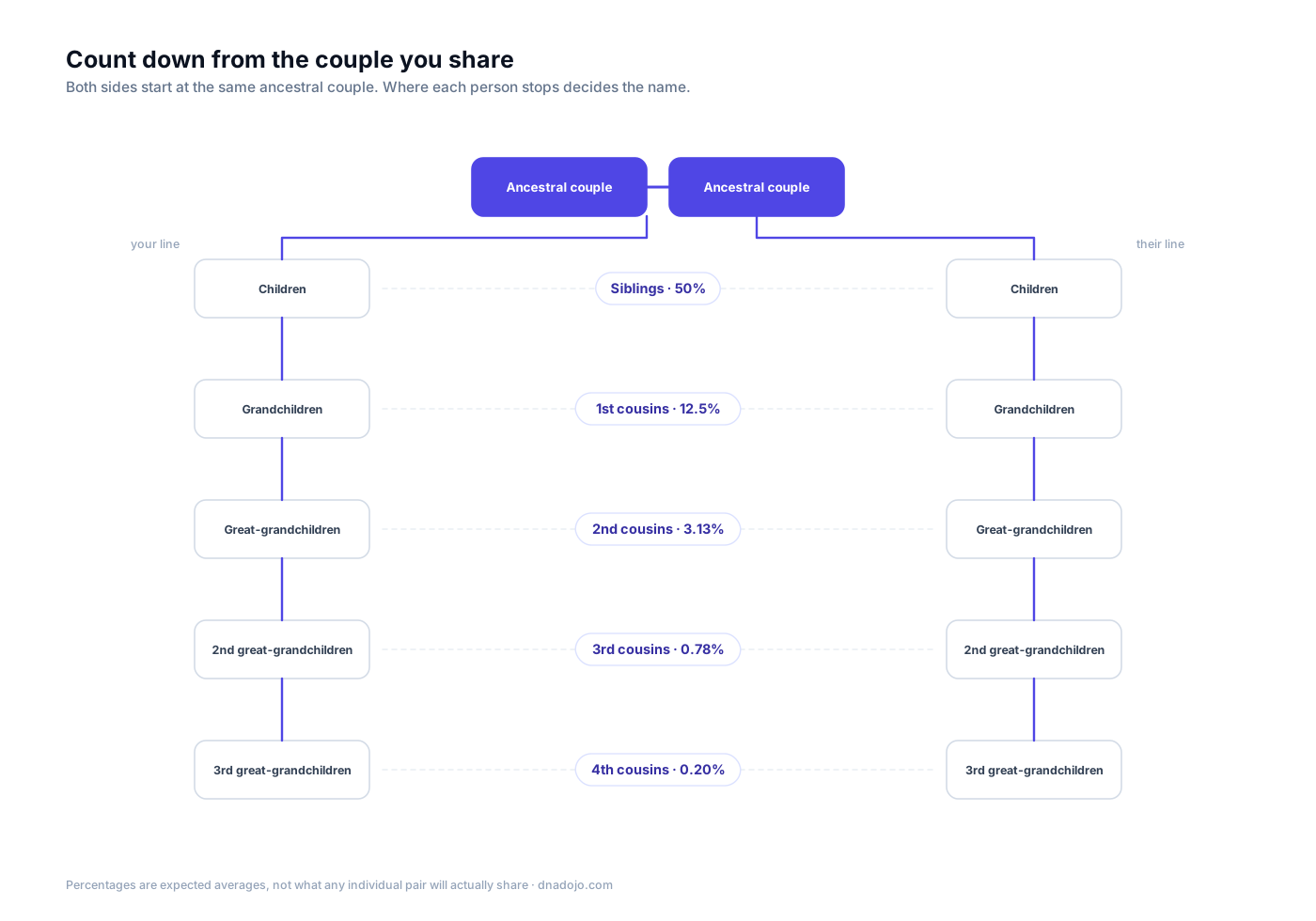
For close relationships, no shared DNA is a serious contradiction and should prompt a careful review of the presumed connection. For more distant cousins, it is often expected. The right question is always: how many inheritance steps separate the two people?
Testing an older relative can recover a connection that disappeared in your own generation. A grandparent may share a clear segment with a distant cousin when you share nothing detectable.
What else could fit?
| Possibility | Why it can look similar | What to check |
|---|---|---|
| Parent or child | A close direct relationship should share about half. | A zero result is incompatible with the expected autosomal relationship. |
| Second cousin | Nearly all pairs share something detectable. | A zero result is unusual and merits checking the assumed path. |
| Fourth cousin and beyond | Many real relatives inherit no detectable shared segment. | Use records and older relatives where available. |
What to do next
- Count the generations to the proposed common ancestors.
- Check whether the relationship is close enough that zero would be surprising.
- If it is distant, test an older relative or revisit the paper trail rather than treating zero as a disproof.
Questions people ask
Can third cousins share no DNA?
It is possible, although more distant relationships are more likely to share none.
Does no DNA match disprove a family tree?
Not by itself for distant relationships.
Can an older relative help?
Yes. They are one or more generations closer to the shared ancestors and may retain segments you did not inherit.
Published September 14, 2026 · Reviewed against DNADojo dataset v1.0.0-simulated · Sources and limitations